


Toyota Tundra 4WD vs RWD: Which Should You Buy?
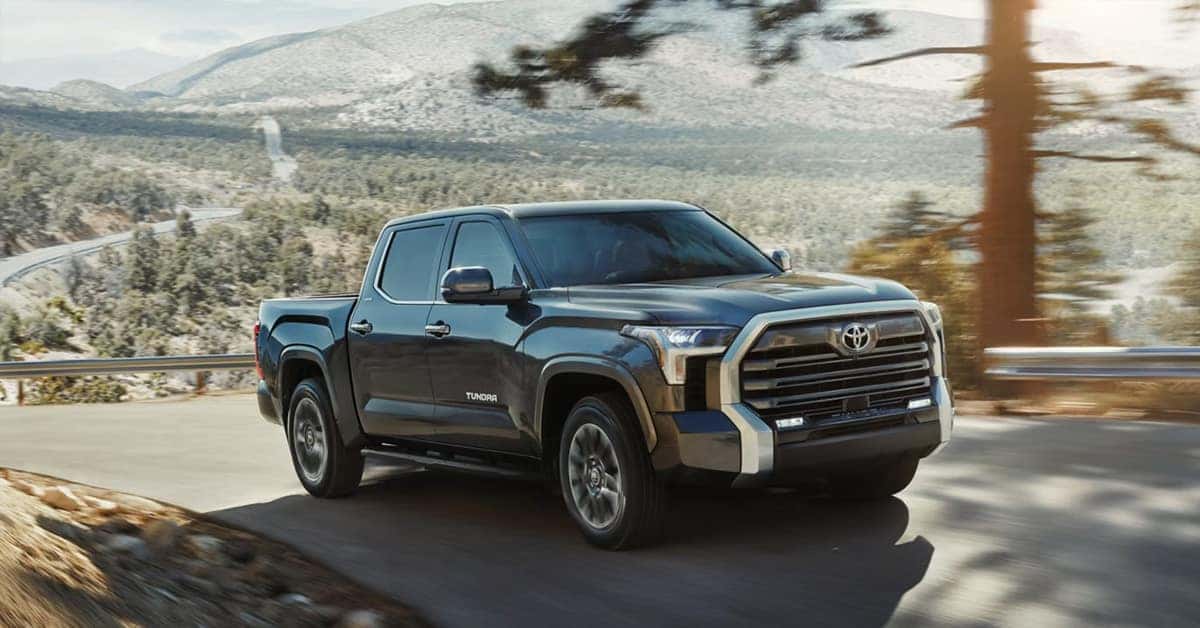
The Toyota Tundra 4WD vs. RWD decision comes down to how and where you plan to drive. RWD can be a smart choice for everyday roads and strong towing and payload capability, while 4WD adds extra traction for off-road adventures, slippery roads, and challenging terrain. Understanding the Toyota Tundra drivetrain options, towing capability, fuel economy, and performance can help you choose the setup that fits your needs.
At Grants Pass Toyota, we are here to make your next truck purchase simple. Our team can assist with sales, service, parts, and other automotive needs long after you drive home. Give us a call or contact Grants Pass Toyota today to find the Tundra that fits your lifestyle.
Which Toyota Tundra Drivetrain Is Right for You?
Choosing between the Toyota Tundra 4WD vs RWD drivetrain depends on how you plan to use your truck. RWD is a strong fit for everyday driving, highway trips, hauling, and towing on paved roads. 4WD adds extra traction for off-road trails, mud, snow, steep grades, and challenging conditions.
When Is RWD the Better Choice?
RWD makes sense when most of your driving takes place on paved roads around Grants Pass, Medford, or Brookings. Its lighter design can also improve fuel economy, payload, and towing capacity in certain configurations.
Consider RWD if you prioritize:
- Daily commuting and highway driving
- Paved-road towing and hauling
- A lighter truck configuration
- Potentially better fuel economy
- Strong everyday capability
When Should You Choose 4WD?
Consider 4WD if you regularly encounter rough or slippery surfaces. It can provide added traction on gravel roads, muddy trails, snow-covered routes, and uneven terrain.
Ultimately, the right Tundra depends on your driving routine. If you need help comparing configurations, Grants Pass Toyota can help you find the setup that fits your needs.
What Is the Difference Between Toyota Tundra 4WD and RWD?
The main Toyota Tundra 4WD vs RWD difference is how engine power reaches the wheels. RWD sends power to the rear wheels, while 4WD can distribute power to all four wheels when additional traction is needed.
How Does RWD Work?
A rear-wheel-drive Tundra powers its rear wheels while the front wheels handle steering. This straightforward setup works well for everyday driving and can help keep the truck lighter.
RWD is especially practical for drivers who spend most of their time on paved roads around Grants Pass, Medford, or Brookings. It can also offer slight advantages in fuel economy and towing capacity on certain configurations.
How Does 4WD Work?
A 4WD Tundra adds components that allow power to reach the front and rear wheels. Drivers can select different modes based on road and terrain conditions.
Key 4WD settings include:
- 2WD: Designed for normal road driving.
- 4H: Helps provide additional traction on slippery or loose surfaces.
- 4L: Provides low-speed control for demanding off-road conditions.
The added hardware makes 4WD heavier than RWD, but it also provides greater versatility when roads become difficult.
Which Setup Fits Your Driving?
The choice comes down to where you spend your time behind the wheel. RWD can be a smart fit for daily driving, while 4WD offers an advantage for frequent off-road adventures and challenging conditions.
If you want to compare Tundra configurations in person, Grants Pass Toyota can help you evaluate the available options and find the drivetrain that matches your needs.
How Does 4WD vs RWD Affect Tundra Performance?
The drivetrain can change how a Tundra handles traction, towing, and different road conditions. RWD can provide strong performance on paved roads, while 4WD adds capability when surfaces become slippery, loose, or uneven.
How Does Drivetrain Choice Affect Towing?
When comparing Toyota Tundra 4WD vs RWD towing, RWD can have a slight advantage in maximum capacity because it weighs less. That lighter configuration leaves more room within the truck’s weight limits for passengers, cargo, and trailer weight.
However, 4WD can be useful when towing on challenging surfaces. Extra traction may help when pulling a trailer up a gravel incline, across muddy ground, or onto a slippery boat ramp.
Which Drivetrain Provides Better Traction?
RWD works well when conditions are dry and predictable. When rain, snow, mud, or loose gravel enters the picture, 4WD can send power to all four wheels for additional grip.
For drivers who regularly travel beyond paved roads near Grants Pass, Medford, or Brookings, that added traction can make a meaningful difference.
Which Tundra Performance Matters Most to You?
Consider these priorities when choosing your drivetrain:
- Paved-road performance: RWD is well suited to everyday driving.
- Maximum towing: RWD can offer higher ratings on certain configurations.
- Low-traction surfaces: 4WD provides greater traction.
- Off-road capability: 4WD is the stronger choice for challenging terrain.
If you’re comparing Tundra configurations, Grants Pass Toyota can help you find the setup that delivers the performance you need for work, travel, and recreation.
Which Toyota Tundra Is Better for Towing?
The Tundra offers strong towing capability, but the right setup depends on your trailer, terrain, and driving habits. Among the Toyota Tundra drivetrain options, RWD can provide a slight advantage in maximum towing capacity because it has less mechanical weight. 4WD may tow slightly less in certain configurations, but it provides added traction when pulling a trailer across loose or slippery surfaces.
How Does RWD Support Towing?
RWD can be a great choice for drivers who primarily tow on paved roads. Its lighter configuration can leave more capacity available for trailer weight, passengers, and cargo.
For certain Tundra configurations, RWD can tow up to 12,000 pounds. Actual capacity varies by trim, cab, bed, equipment, and configuration.
When Is 4WD Better for Towing?
4WD becomes valuable when towing takes you beyond smooth pavement. Extra traction can help when launching a boat, climbing a gravel driveway, or traveling over muddy or uneven ground.
Consider 4WD if you frequently:
- Tow on gravel or dirt roads
- Launch boats on slippery ramps
- Travel through muddy or snowy conditions
- Pull trailers on steep or uneven terrain
Which Tundra Setup Should You Choose?
If most of your towing happens on paved roads around Grants Pass, Medford, or Brookings, RWD may offer the capacity you need. If your trailer trips regularly involve challenging surfaces, 4WD can provide greater confidence.
Visit Grants Pass Toyota to compare available Tundra configurations and find the towing setup that fits your needs.
Is the Toyota Tundra 4WD Better for Off-Road Driving?
Yes, 4WD is the stronger choice for drivers who regularly take their Tundra beyond paved roads. The Toyota Tundra 4WD vs RWD drivetrain comparison becomes especially important when trails bring mud, loose gravel, steep climbs, or uneven surfaces.
Why Is 4WD Better Off Road?
A 4WD Tundra can send power to all four wheels when additional traction is needed. Its available 4H and 4L settings help the truck handle different terrain with greater control.
Key advantages include:
- 4H: Provides added traction on loose or slippery surfaces.
- 4L: Delivers low-speed control for demanding terrain.
- Multi-Terrain Select: Helps optimize traction for different surfaces.
- Crawl Control: Helps manage speed across challenging terrain.
- Locking rear differential: Improves traction when conditions get difficult.
When Is RWD Enough?
RWD can handle light-duty dirt roads and occasional gravel without an issue. However, it may not provide the same traction when terrain becomes particularly steep, muddy, or uneven.
For drivers exploring trails around Southern Oregon, 4WD can provide valuable capability when a scenic route becomes more challenging than expected.
Which Tundra Is Best for Your Adventures?
If off-road driving is a regular part of your lifestyle, 4WD is the clear choice. If you mainly commute and occasionally travel on maintained dirt roads, RWD may be all you need.
Stop by Grants Pass Toyota to compare Tundra configurations and find the capability that matches where you want to go.
Does 4WD or RWD Get Better Fuel Economy?
RWD generally has a slight fuel-economy advantage over 4WD because it uses less mechanical hardware and adds less weight. This is one of the key points in the Toyota Tundra 4WD vs RWD difference, especially for drivers who spend most of their time on paved roads.
Why Can RWD Be More Efficient?
A RWD Tundra does not carry the additional transfer case, front driveshaft, and front axle components used by 4WD models. That lighter setup can reduce mechanical losses and help improve efficiency during everyday driving.
Depending on configuration, RWD models can achieve roughly 1 MPG more than comparable 4WD versions.
When Does 4WD Use More Fuel?
Using 4WD can increase fuel consumption because additional drivetrain components are engaged. The difference is most noticeable when using 4H or 4L for low-traction or off-road conditions.
For drivers commuting around Grants Pass, Medford, or Brookings, RWD may make more sense if fuel efficiency is a priority. However, the added capability of 4WD can be worth the tradeoff if you frequently drive on rough or slippery terrain.
Which Tundra Fits Your Priorities?
Consider your typical driving conditions:
- Mostly paved roads: RWD may offer better efficiency.
- Frequent off-road trips: 4WD provides added capability.
- Mixed driving: Consider whether the extra traction justifies the small efficiency tradeoff.
If you’re comparing Tundra configurations, Grants Pass Toyota can help you weigh fuel economy, capability, and everyday driving needs before choosing your next truck.
Is Toyota Tundra RWD Better for Payload and Everyday Driving?
For drivers who use their Tundra mainly for commuting, errands, hauling, and paved-road trips, RWD can be a practical choice. Its lighter drivetrain can provide a slight advantage in payload capacity, while also delivering the strong performance expected from a full-size pickup.
How Does RWD Affect Payload?
Because RWD models carry less drivetrain hardware, they can have more available weight capacity for passengers, cargo, and equipment. The exact payload rating varies by configuration, so it is important to check the specifications for the specific Tundra you choose.
This can be useful when carrying tools during a workday or loading supplies for a weekend project. For many everyday tasks, RWD provides plenty of capability without the added weight of a 4WD system.
Is RWD Good for Everyday Driving?
RWD works well for routine driving on paved roads around Grants Pass, Medford, and Brookings. It can also be a smart option for drivers who occasionally tow but rarely encounter demanding terrain.
When considering Toyota Tundra 4WD vs RWD towing, RWD can offer higher maximum ratings on certain configurations. However, 4WD may be preferable when towing regularly involves mud, gravel, steep grades, or other low-traction surfaces.
When Should You Consider RWD?
RWD may be a good fit if you prioritize:
- Everyday commuting and highway travel
- Payload capacity
- Paved-road towing
- A lighter drivetrain
- Potentially better fuel economy
If your driving needs center on everyday capability, Grants Pass Toyota can help you compare Tundra configurations and find a setup that works for your routine.
How Much More Does a 4WD Toyota Tundra Cost?
Choosing between the Toyota Tundra drivetrain options can affect more than capability. In general, upgrading from RWD to 4WD on applicable Tundra trims can add around $3,000 to $3,400 to the MSRP, though pricing varies by trim and configuration.
What Does 4WD Add to the Price?
The higher price reflects the additional hardware and capability provided by the 4WD system. This includes components that allow the Tundra to send power to the front wheels when extra traction is needed.
The actual difference depends on factors such as:
- Tundra trim and configuration
- Cab and bed combination
- Available equipment
- Whether 4WD is standard or optional
Some specialized off-road trims include 4WD as standard, so there may not be an RWD version to compare.
Is 4WD Worth the Extra Cost?
For drivers who regularly travel off pavement or deal with snow, mud, and steep terrain, the added capability may justify the higher price. If your Tundra primarily handles paved roads around Grants Pass, Medford, or Brookings, RWD may provide the capability you need at a lower starting cost.
Before choosing, consider how often you’ll actually use 4WD. Grants Pass Toyota can help you compare available Tundra configurations and find the right balance of capability and value.
Which Toyota Tundra Should You Choose for Your Driving Needs?
The best Tundra drivetrain depends on where you drive and what you expect from your truck. The Toyota Tundra 4WD vs RWD drivetrain choice becomes easier when you match each setup to your daily routine, towing needs, and weekend adventures.
When Is RWD the Better Fit?
RWD can be a smart choice for drivers who spend most of their time on paved roads. It offers capable performance for commuting, highway trips, hauling, and towing, while its lighter design can provide efficiency and payload advantages.
RWD may suit you if you:
- Mostly drive on paved roads
- Prioritize fuel efficiency
- Regularly haul cargo
- Want strong towing capability
- Rarely travel off-road
For everyday trips around Grants Pass, Medford, or Brookings, RWD may provide everything you need.
When Is 4WD Worth Choosing?
4WD makes more sense when challenging terrain is part of your routine. It provides additional traction for snow, mud, gravel, steep roads, and off-road trails.
Consider 4WD if you:
- Frequently explore off-road trails
- Drive on loose or uneven surfaces
- Tow on challenging terrain
- Regularly encounter snow or mud
- Want additional traction and versatility
If you’re still deciding, Grants Pass Toyota can help you compare available Tundra configurations and determine which drivetrain best matches your lifestyle.
What Should You Know About Toyota Tundra 4WD vs RWD?
Understanding the Toyota Tundra 4WD vs RWD difference can make choosing the right truck much easier. Both drivetrains deliver capable performance, but each one has strengths that suit different driving habits and conditions.
What Are the Main Differences?
The biggest differences involve traction, weight, efficiency, and capability. RWD is lighter and can offer advantages for everyday driving, while 4WD adds hardware and capability for challenging surfaces.
Keep these points in mind:
- RWD: Lighter, efficient, and well-suited to paved roads.
- 4WD: Adds traction for snow, mud, gravel, and off-road terrain.
- Towing: RWD can offer higher maximum ratings on certain configurations.
- Payload: RWD can provide a slight payload advantage.
- Capability: 4WD offers greater versatility in demanding conditions.
Which Tundra Fits Your Lifestyle?
Think about where your truck will spend most of its time. Someone commuting through Grants Pass may have different needs than a driver regularly heading onto forest roads near Brookings or Medford.
If paved roads make up most of your routine, RWD can be a practical choice. For frequent off-road travel or low-traction conditions, 4WD may be worth the additional cost and weight.
How Can You Choose With Confidence?
Consider your typical roads, towing requirements, cargo needs, and recreational plans before making a decision. Grants Pass Toyota can help you compare Tundra configurations and find the drivetrain that makes sense for your everyday needs.
Which Toyota Tundra drivetrain is the best for off-roading?
The Toyota Tundra 4WD is the best choice for off-roading because it offers 4WD Low, Multi-Terrain Select, Crawl Control, and an available locking rear differential.
How does the different drivetrain options of the Toyota Tundra affect its performance?
RWD provides strong performance on paved roads, while 4WD offers better traction on slippery and uneven surfaces. RWD can also provide slightly higher towing and payload ratings.
What is the price difference between the Toyota Tundra 4WD and RWD model?
Upgrading from RWD to 4WD typically costs around $3,000 to $3,400 MSRP on applicable Tundra trims.
Does drivetrain affect a vehicle’s fuel economy?
Yes. RWD Tundra models can achieve roughly 1 MPG more than comparable 4WD models because they are lighter and have fewer drivetrain components.
Where Can You Find the Right Tundra for Your Needs?
Choosing the right drivetrain comes down to how you plan to use your truck. RWD can be a practical choice for everyday driving and towing, while 4WD provides added traction for off-road adventures and challenging Oregon terrain. Drivers from Brookings, Medford, and Grants Pass can turn to Grants Pass Toyota for help comparing Tundra configurations and finding the right fit.
If you’re comparing different truck drivetrains, learn more about Toyota Tacoma 4WD vs AWD to see how the systems handle different driving conditions. You can also see why the Toyota Tacoma is a strong Oregon truck for drivers who want capability and versatility. For those leaning toward a full-size pickup, take a closer look at how the Toyota Tundra fits Oregon driving and its advantages for work, travel, and recreation.
Ready to find your next truck? Contact Grants Pass Toyota today to browse our wide selection, including the Tundra, and get assistance with sales, service, parts, and more.
Get Directions to Grants Pass Toyota
Disclaimer: All information is provided for general informational and entertainment purposes only. While we strive for accuracy, we cannot guarantee that all content is complete, current, or error-free. Any reliance you place on such information is strictly at your own risk. This article may include opinions and is not endorsed by, or officially affiliated with, any vehicle manufacturer or brand. Always consult official sources – such as the vehicle’s owner’s manual, authorized dealerships, or certified professionals – for the most up-to-date and personalized information.
0 comment(s) so far on Toyota Tundra 4WD vs RWD: Which Should You Buy?